Introduction
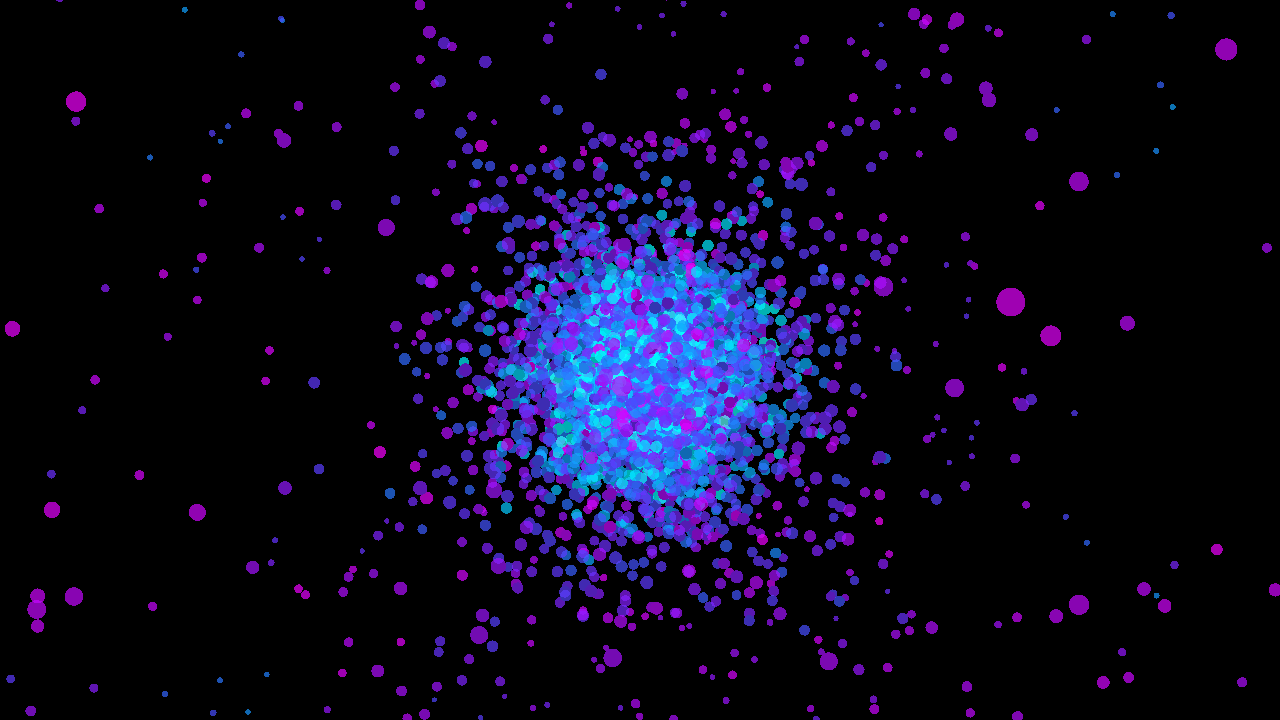
physim is a versatile pipeline-based framework for running N-Body simulations. At its core, physim creates a system composed of entities and the state of the system is evolved through modular components at regular timesteps. On each timestep, the state of the system is rendered. physim’s functionality come from plugins. These plugins provide components which let users customise how:
- entities are created
- forces are calculated
- numerical integration is performed
- the system is rendered
For example, you may want to simulate a globular cluster with 10,000 stars. You can compose how your system evolves through configuring which elements will be used in your simulation.
# simulation of a plummer sphere with gravity
physim global dt=0.01 iterations=1000! plummer n=10000 ! \
    astro theta=0.3 e=0.02  ! rk4 ! glrender

# add collisions
physim global dt=0.01 iterations=1000! plummer n=10000 ! \
    astro theta=0.3 e=0.02 ! collisions ! rk4 ! glrender

# make everything act like a there's also a spring connecting
# it to the centre of the universe
physim global dt=0.01 iterations=1000! plummer n=10000 ! \
    astro theta=0.3 e=0.02 ! shm ! collisions ! rk4 ! glrender
If you are interested in studying the universe through simulation, then I’d recommend using more well established software for your domain (e.g. NEMO). However, if you want to have fun and render cool videos, then physim might be suit your needs.
The first chapter will focus on how to use physim to run simulations and how to render videos. The second chapter will give an example of how a plugin can be made with Rust.